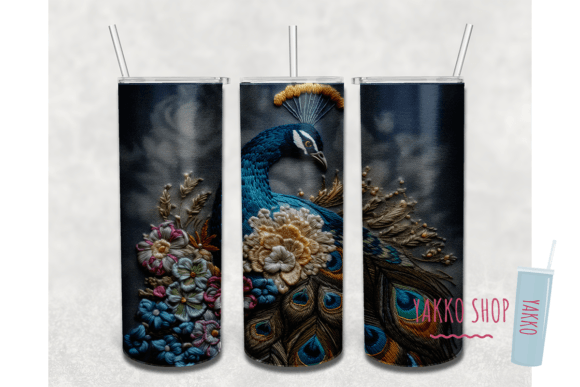
20oz 3D Peacock Embroidered Tumbler Wrap: Elevating Sublimation with Digital Texture
The intersection of traditional textile aesthetics and modern digital fabrication has created a unique niche in the personalized drinkware market. The 20oz 3D Peacock Embroidered Tumbler Wrap represents this convergence perfectly, offering creators the visual richness of intricate needlework without the physical limitations of actual thread. For sublimation professionals, hobbyists, and small business owners, this design serves as more than just a decorative element; it is a strategic asset that bridges the gap between high-end craftsmanship and efficient digital production. Understanding how to leverage this specific digital file requires a grasp of both current design trends and the technical realities of sublimation printing.
It is imperative to clarify immediately that this product is a DIGITAL FILE consisting of a printable PNG download. There is no physical tumbler, fabric patch, or embroidered prop included in this purchase. You are acquiring the intellectual property and digital assets necessary to create your own finished goods. This distinction is vital for managing expectations and ensuring a smooth workflow from download to final press. The listing provides two high-resolution PNG files at 300 DPI, specifically optimized for 20oz skinny tumblers, allowing for immediate integration into professional design software.
The Rise of Faux Texture in Modern Sublimation
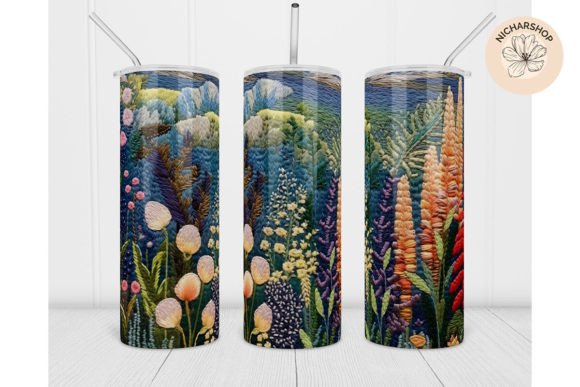
Consumer preferences in personalized goods have shifted significantly over the last few years. While flat, glossy vector art remains popular, there is a growing demand for designs that evoke tactile sensations. The 3D peacock embroidered style capitalizes on this trend by simulating depth, shadow, and stitch texture through high-definition digital imaging. This evolution reflects a broader movement in graphic design where digital tools are used to replicate analog warmth. For entrepreneurs selling on platforms like Etsy or at local craft fairs, offering designs that look handcrafted can justify higher price points and differentiate products in a saturated market.
This specific aesthetic fits seamlessly into current lifestyle trends that favor bohemian, nature-inspired, and artisanal visuals. However, unlike actual embroidery which is time-consuming and difficult to apply to curved stainless steel surfaces, this digital wrap offers consistency and speed. The relevance of this design lies in its ability to satisfy the consumer desire for "handmade" aesthetics while adhering to the scalability requirements of a modern print-on-demand or small-batch business model. It allows creators to offer premium-looking products without investing in industrial embroidery machines or spending hours on manual stitching.
Technical Specifications and File Management
Success with this 20oz 3D Peacock Embroidered Tumbler Wrap depends entirely on proper file handling. Because this is a digital download designed for creation, users must possess intermediate knowledge of image editing software such as Photoshop, GIMP, Affinity Photo, or specialized sublimation RIP software. The files provided are large-format PNGs at 300 DPI, ensuring that the intricate details of the faux embroidery remain crisp even when printed at full size. Low-resolution files often result in pixelated edges that ruin the illusion of texture, but these high-DPI assets maintain integrity during the transfer process.
You will receive two distinct PNG files to accommodate different manufacturing needs:
- Tapered Version: Sized approximately at 9.3” x 8.2”, designed for tumblers that narrow slightly toward the top or bottom.
- Straight Version: Also sized approximately at 9.3” x 8.2”, intended for perfectly cylindrical skinny tumblers.
These dimensions are approximate starting points. Manufacturing tolerances for blank tumblers vary between suppliers, meaning you must measure your specific vessel before printing. The design is intentionally created larger than standard requirements so you can size up or down without losing quality. You will need to adjust the canvas to exactly 9.3” x 8.2” (or your specific measurement) within your chosen software prior to printing. This resizing step is not optional; it is a critical part of the workflow to ensure edge-to-edge coverage without white gaps or overlapping seams.
Understanding the Limitations of Digital Downloads
A common point of confusion for new sublimation users is the difference between raster images and cutting files. Please note that this 20oz 3D Peacock Embroidered Tumbler Wrap is NOT a cutting file. It cannot be used with vinyl cutters like Cricut or Silhouette for adhesive applications. It is exclusively a printable raster image meant for dye-sublimation transfer. Attempting to trace this file for vinyl cutting will result in poor outcomes due to the complex shading and simulated textures that define the 3D effect. Recognizing this limitation early prevents wasted materials and frustration, ensuring the file is used strictly for its intended purpose: heat transfer sublimation.
Practical Implications for Creators and Businesses
Integrating this digital wrap into a product line has significant operational advantages. For freelancers and business owners, time is the most valuable resource. Sourcing physical embroidery patches, aligning them on curved surfaces, and dealing with adhesive failures is labor-intensive. By utilizing a high-quality digital simulation, production time per unit drops dramatically. This efficiency allows for faster turnaround times on custom orders and the ability to test new designs with minimal financial risk. If a particular colorway of the peacock design does not resonate with customers, the loss is limited to ink and paper rather than expensive textiles.
Furthermore, digital files offer unparalleled versatility. While this wrap is designed for 20oz skinny tumblers, the high resolution allows it to be adapted for other substrates. With proper resizing, elements of the design could potentially be used for coasters, keychains, or smaller glassware. This flexibility supports a diversified product catalog, which is essential for stabilizing revenue streams in seasonal markets. However, creators must always respect the original sizing guidelines for the primary application to maintain the aspect ratio and prevent distortion of the intricate peacock motif.
Navigating Color Accuracy and Print Variables
One of the most critical aspects of working with any digital sublimation file, including this 3D peacock wrap, is color management. Colors can vary significantly from computer monitor to printer output, and finally to the pressed substrate. Monitors emit light using RGB color profiles, while sublimation printers use CMYK inks. Without proper ICC profiles calibrated to your specific printer, ink, and paper combination, the vibrant teals, golds, and purples of the peacock design may appear dull or shifted.
Professionals understand that the first print is rarely perfect. It is standard practice to print a test strip or a scaled-down version of the wrap to verify color accuracy before committing to a full-size transfer. Factors such as humidity, press temperature, dwell time, and the polymer coating quality of the tumbler blank all influence the final result. The simulated embroidery effect relies heavily on contrast and shadow definition; if the print is too dark or too light, the 3D illusion flattens. Users should keep detailed notes on their press settings and color corrections to establish a repeatable baseline for future production runs.
Software Proficiency as a Prerequisite
Purchasing this digital download implies a level of technical self-sufficiency. You will need a program capable of opening large PNG files and resizing them to precise physical dimensions. Basic photo viewers on smartphones or tablets are generally insufficient for this task. Familiarity with concepts like DPI, canvas size versus image size, and transparent backgrounds is necessary. For those new to sublimation, investing time in learning these software skills is as important as purchasing the design itself. The file provides the raw material, but the creator’s technical expertise determines the quality of the final product.
Market Positioning and Value Perception
In an era where consumers are increasingly savvy about mass-produced goods, the value proposition of items like the 20oz 3D Peacock Embroidered Tumbler Wrap lies in perceived artistry. Even though the end user may intellectually understand the item is sublimated, the emotional response to the texture-rich visual creates a sense of luxury. This psychological aspect of design is powerful. Marketers and sellers should highlight the intricacy of the pattern and the vibrancy of the colors in their product photography. Showing close-ups that emphasize the simulated stitch work helps communicate quality.
Additionally, because this is an instant downloadable file, it caters to the "maker economy" where individuals prefer to produce goods locally rather than waiting for international shipping. This aligns with sustainable consumption habits by reducing logistics-related carbon footprints. For educators teaching sublimation or graphic design, this file also serves as an excellent teaching tool for demonstrating texture mapping, scaling, and color theory in a practical, commercial context. The utility of the file extends beyond simple decoration; it is a component of a larger ecosystem of digital crafting that empowers users to create professional-grade merchandise independently.
Ultimately, the 20oz 3D Peacock Embroidered Tumbler Wrap is a testament to how digital assets can enhance physical products. By combining the timeless appeal of embroidered motifs with the precision of modern printing technology, it offers a practical solution for creators seeking to elevate their offerings. Success with this file requires adherence to technical specifications, an understanding of color science, and a commitment to quality control. When executed correctly, the result is a stunning, textured tumbler design that meets contemporary market demands while streamlining the creative production process.