Strategic Application of 3D Christmas Inflated Tumbler Design for Seasonal Product Lines
The integration of a 3D Christmas Inflated Tumbler Design into your seasonal product catalog represents more than a simple aesthetic choice; it is a tactical decision regarding inventory planning, production efficiency, and market positioning. For creators, small business owners, and print-on-demand operators, the shift toward high-fidelity digital assets allows for rapid iteration and reduced overhead during the critical Q4 sales window. Understanding the technical specifications and strategic utility of these digital wraps is essential for maximizing return on investment and ensuring brand consistency across physical products.
Defining the Asset: Technical Specifications and Production Reality
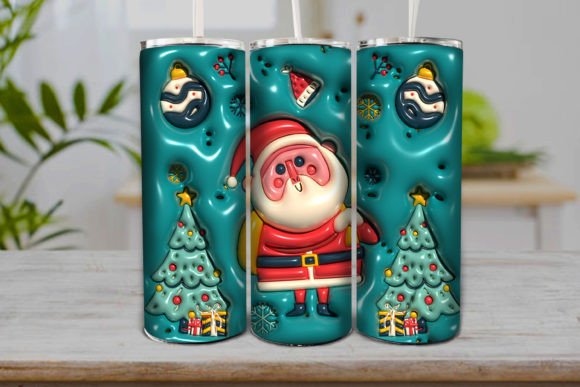
Before incorporating a 3D Christmas Inflated Tumbler Wrap design digital download into your workflow, it is necessary to understand exactly what constitutes the deliverable and how it translates from screen to substrate. This specific asset class is engineered for precision in sublimation printing, balancing visual impact with manufacturing tolerances. The standard package typically includes a single ZIP file containing high-resolution PNG and PDF formats at 300 DPI, which is the industry benchmark for crisp, color-accurate sublimation transfers.
The dimensional specification of 9.3 x 8.2 inches is not arbitrary. This print size is calibrated to accommodate the surface area of standard 20oz tumblers while providing sufficient bleed room for alignment variance. Crucially, this design ecosystem often provides two distinct variations: a straight 20oz tumbler wrap and a tapered 20oz tumbler wrap. Distinguishing between these two files is a fundamental operational requirement. Using a straight wrap on a tapered vessel results in distorted imagery and wasted materials, while using a tapered wrap on a straight vessel creates uneven seams. Strategic inventory management begins with selecting the correct digital asset for your specific blank supplier’s specifications.
Operational Efficiency Through Digital Standardization
For entrepreneurs and freelancers managing limited production capacity, the primary value of a pre-designed 3D Christmas Inflated Tumbler Design lies in time allocation. Creating custom 3D renders or hand-drawing complex inflatable textures requires significant software proficiency and hours of labor. By utilizing a verified digital download, you effectively outsource the R&D phase of product development. This allows you to redirect cognitive resources toward marketing strategy, customer acquisition, and quality control.
Consider the opportunity cost of designing versus selling. During the peak holiday season, every hour spent troubleshooting vector paths or adjusting texture maps is an hour lost in revenue generation. A high-quality 300 DPI PNG file serves as a plug-and-play solution that integrates seamlessly into RIP software or standard graphic editors. This standardization reduces the learning curve for new team members and minimizes the risk of human error during the file preparation stage. When operations are streamlined through reliable digital assets, scalability becomes a realistic objective rather than a theoretical goal.
Market Positioning and Visual Communication
The "inflated" aesthetic in holiday design serves a specific psychological function in consumer communication. Unlike flat vector art, 3D inflated designs evoke tactile sensations of softness, nostalgia, and playfulness. These sensory cues align directly with the emotional drivers of holiday gift-giving. When you select a 3D Christmas Inflated Tumbler Wrap design, you are leveraging established visual semiotics that signal comfort and festivity without requiring extensive copywriting to explain the product's vibe.
However, strategic positioning requires intentionality. Not all inflated designs serve the same market segment. Some lean towards retro kitsch, appealing to Gen Z and Millennial nostalgia, while others adopt a polished, modern sheen suitable for corporate gifting or upscale home decor. Analyzing your target demographic’s preferences should dictate which specific 3D render you acquire. A mismatch between the design tone and your audience’s expectations can lead to low conversion rates, regardless of the technical quality of the print. Use these designs as tools to reinforce your existing brand identity, not as generic fillers to occupy shelf space.
Risk Mitigation and Quality Assurance
Reliance on digital downloads introduces specific risks that must be managed proactively. The most common failure point in using a 3D Christmas Inflated Tumbler Design is ignoring the distinction between mockup and production file. Product photos included in digital packages are strictly for sample purposes and visualization; they are not printable assets. Attempting to use a low-resolution web mockup for production will result in pixelated, unprofessional merchandise that damages brand reputation.
Furthermore, color management remains a critical variable. While 300 DPI ensures resolution clarity, it does not guarantee color fidelity across different substrates and printer profiles. Sublimation ink behaves differently on polymer coatings than RGB screens display light. Before committing to a full production run, strategic practitioners always conduct test prints. Verify that the "inflated" shading translates correctly and that highlights do not blow out or shadows crush into solid black. Establishing a standardized color profile for your specific printer-paper-tumbler combination is the only way to ensure the digital promise matches the physical reality.
Strategic Planning for Seasonal Inventory
Effective use of these designs extends beyond individual product creation; it informs broader inventory planning. Because digital downloads have zero marginal cost of replication, they allow for agile testing. You can list multiple variations of the 3D Christmas Inflated Tumbler Wrap design as mockups or limited previews to gauge market interest before producing physical stock. This data-driven approach prevents over-investment in unpopular styles and identifies winners early in the season.
When planning your Q4 roadmap, consider the lifecycle of the design. Inflated Christmas aesthetics have a narrow relevance window. Strategic timing involves launching these products early enough to capture the gift-buying rush but phasing them out before post-holiday clearance devalues the brand. Additionally, think about bundling. Does this tumbler design coordinate with other digital assets in your library? Creating cohesive collections increases average order value and simplifies the customer’s decision-making process. A standalone tumbler is a commodity; a coordinated holiday set is a curated experience.
Evaluating Long-Term Value and Licensing
Decision-makers must evaluate digital assets through the lens of long-term viability and legal compliance. When acquiring a 3D Christmas Inflated Tumbler Design, scrutinize the licensing terms. Some downloads permit unlimited commercial end-products, while others cap sales volume or prohibit use on certain platforms. Understanding these constraints upfront prevents legal exposure and business disruption later. Treat the license agreement as a binding component of your business infrastructure.
Beyond legality, consider the asset's adaptability. Can the elements of the 3D design be isolated or recolored for future seasons? While "Christmas" is specific, the underlying 3D inflation technique may be applicable to Valentine’s Day, Easter, or general winter themes if the asset is layered or editable. Investing in versatile, high-quality source files yields compounding returns over time, whereas single-use novelty designs offer only temporary gains. Building a proprietary library of adaptable, high-resolution assets creates a sustainable competitive advantage in the crowded personalized goods market.
Intentional Implementation Over Random Acquisition
The abundance of available digital designs can lead to accumulation without application. A strategic approach rejects the impulse to download every trending 3D Christmas Inflated Tumbler Wrap design in favor of selective curation. Ask three questions before acquisition: Does this solve a specific gap in my current lineup? Does it match my production capabilities and equipment specs? Does it resonate with my verified customer persona?
If the answer to any of these is uncertain, pause. Intentionality drives profitability. The goal is not to possess the most files, but to convert the right files into revenue efficiently. Document your performance metrics for each design used. Track sell-through rates, return reasons, and customer feedback specifically related to the visual style. This empirical data transforms subjective design preferences into objective business intelligence, guiding future acquisitions and refining your product development strategy for subsequent seasons.
Optimizing the Customer Experience Through Transparency
Finally, the strategic use of these designs impacts the end-user experience. Because 3D renders look hyper-realistic, customers may expect the physical product to possess actual depth or texture. Managing this expectation is part of the service design. Use the provided mockups responsibly, but also include flat-lay photography or videos of the actual printed tumbler in your listings. Clearly communicate that the "3D effect" is a visual print, not a physical embossment.
This transparency builds trust and reduces return rates. When customers understand exactly what they are receiving, satisfaction scores improve. Furthermore, leverage the high-resolution nature of the 300 DPI files to showcase detail in zoom features. Allow the quality of the 3D Christmas Inflated Tumbler Design to serve as proof of your commitment to excellence. In a digital-first marketplace, the fidelity of your product representation is often the primary proxy for product quality. Aligning your digital assets with honest, clear communication completes the strategic loop from acquisition to satisfied customer.