3D Fireplace Christmas SVG DXF 4 Layers: Integrating Layered Mandala Designs into Creative Workflows
The intersection of traditional holiday aesthetics and modern digital fabrication offers unique opportunities for creators, small business owners, and hobbyists. The 3D Fireplace Christmas SVG DXF 4 Layers design represents a specific niche within this space, combining the warmth of a festive hearth with the intricate precision of mandala art. For professionals using Cricut, Silhouette, or laser cutting equipment, this asset is more than just a seasonal decoration; it is a functional component in a broader production workflow. Understanding how to leverage this four-layer architecture effectively can streamline manufacturing processes, enhance product quality, and expand creative offerings during the high-demand holiday season.
Understanding the Four-Layer Architecture
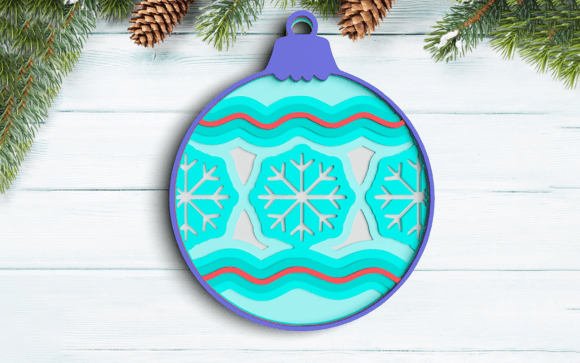
In digital crafting and laser cutting, depth is achieved through subtraction and stacking rather than additive modeling. The 3D Fireplace Christmas SVG DXF 4 Layers file utilizes this principle by separating visual elements into distinct planes. Unlike a flat vector image, this design requires the user to treat each layer as an independent structural component. The mandala theme adds complexity because the negative space in one layer must align perfectly with the positive space in the next to create the illusion of three-dimensional depth.
For makers planning a production run, recognizing this layered structure during the pre-production phase is vital. It dictates material selection, adhesive choices, and assembly time. A four-layer design typically consists of a background base, two intermediate depth layers that build the fireplace mantle and flame details, and a foreground frame that encapsulates the mandala pattern. This separation allows for multi-material integration, such as using darker cardstock for shadow layers and metallic paper for highlights, without requiring complex registration marks during the cutting process.
File Format Compatibility and Software Integration
A critical aspect of integrating this asset into your workflow is selecting the correct file format for your specific hardware ecosystem. The provided ZIP archive contains four distinct formats, each serving a specialized function in the digital-to-physical pipeline.
- SVG (Scalable Vector Graphics): This is the primary format for Cricut Design Space and Silhouette Studio Designer Edition. Because SVGs retain individual path data and layer grouping, they allow for immediate manipulation upon import. Users can ungroup elements to resize specific mandala sections or adjust spacing between layers without losing resolution.
- DXF (Drawing Exchange Format): Essential for laser cutter operators and users of the basic version of Silhouette Studio. DXF files translate vector paths into coordinates that CNC machines interpret precisely. When importing this 3D Fireplace design into LightBurn or RDWorks, the DXF ensures that cut lines remain closed vectors, preventing the laser from making unnecessary passes or failing to drop out internal mandala details.
- EPS (Encapsulated PostScript): While less common for hobbyist cutters, EPS is the industry standard for professional print shops and high-end laser engraving software like Adobe Illustrator or CorelDRAW. If you plan to scale this design for large-format architectural installations or commercial signage, EPS preserves the mathematical curves better than rasterized conversions.
- PNG (Portable Network Graphics): Provided at 300 DPI, this high-resolution raster file serves as a reference mockup or a printable texture. In a hybrid workflow, some creators print the PNG onto cardstock before cutting to add color gradients that vinyl or plain paper cannot achieve. It also functions as a digital proof for client approvals before committing expensive materials to the blade or laser.
Material Selection and Preparation Strategy
The success of a 3D Fireplace Christmas SVG DXF 4 Layers project hinges on material consistency. Because the design relies on optical depth, variations in material thickness can disrupt the intended shadow effects. Before initiating any cuts, measure your substrate with calipers. Standard 65lb cardstock behaves differently than 80lb cover stock or 3mm basswood.
For paper-based executions, consider the grain direction. Cutting intricate mandala patterns against the grain can cause fraying or tearing at delicate connection points. Aligning the grain vertically often yields cleaner edges for fireplace structures. For laser cutting, test the kerf (the width of material removed by the laser beam) on a scrap piece first. Mandala designs have tight tolerances; if the kerf is too wide, the interlocking layers may become loose, compromising the structural integrity of the final 3D assembly. Adjusting power and speed settings specifically for the innermost detailed layers versus the outer structural frames can optimize both detail and efficiency.
Assembly Workflow and Quality Control
Efficient assembly transforms a pile of cut pieces into a polished product. With a four-layer design, organization is paramount. Implement a staging system where layers are sorted immediately after cutting. Using foam tape or silicone spacers between layers creates consistent separation, which is essential for the "3D" effect. Liquid adhesives can warp paper, so double-sided tape sheets or precision glue pens are preferable for maintaining flatness.
Quality control should occur at every stage, not just at the end. Inspect each layer for incomplete cuts or scorch marks before stacking. In a business context, establishing a standard operating procedure (SOP) for this specific design reduces waste. For example, if producing shadow boxes for sale, create an assembly jig or template that holds the layers in perfect alignment while the adhesive sets. This ensures that every unit produced maintains identical dimensions, which is crucial for packaging and customer satisfaction. The blend of Christmas and mandala themes appeals to buyers looking for sophisticated decor, so finishing touches like edge painting or subtle backlighting can significantly increase perceived value.
Commercial Applications and Product Diversification
Beyond personal crafting, this design asset fits into various commercial workflows. Small business owners can utilize the 3D Fireplace Christmas SVG DXF 4 Layers as a core product for seasonal markets or Etsy listings. However, its utility extends beyond standalone sales. Consider integrating it as a premium upsell or a limited-edition bonus for existing customers. The versatility of the included file formats allows for cross-platform marketing; use the high-res PNG for social media teasers and the physical assembled unit for video content demonstrating the layering process.
Educators and workshop leaders can also leverage this design as a teaching tool for spatial reasoning and digital fabrication. The four-layer structure provides a manageable complexity level for students learning about Z-axis thinking in a 2D medium. By breaking down the assembly process, instructors can demonstrate concepts of tolerance, material properties, and design hierarchy. For freelancers offering custom holiday decor services, having a pre-tested, reliable file reduces design time, allowing more focus on customization and client communication.
Optimizing Digital Asset Management
Instant download assets require disciplined file management to remain useful long-term. Upon acquiring the ZIP file, extract and rename the contents with descriptive metadata. Instead of generic filenames, use a naming convention that includes the project type, layer count, and date (e.g., Xmas_Fireplace_Mandala_4L_SVG_v1). Store the master files in a cloud-synced folder accessible across devices, ensuring you can retrieve the DXF for laser work or the SVG for vinyl cutting regardless of location.
Maintain a project log associated with this design. Document which materials worked best, optimal machine settings, and assembly time per unit. This institutional knowledge prevents reinventing the wheel during future holiday seasons. As trends evolve, you may revisit this asset to modify colors or scale, and having accurate historical data streamlines the iteration process. Effective asset management turns a single purchase into a sustainable resource within your creative or business ecosystem.
Troubleshooting Common Implementation Challenges
Even with high-quality files, execution issues can arise. If the mandala details are too fragile for your chosen material, consider scaling the design up by 10-15% or simplifying the innermost paths in your vector software. Conversely, if the layers appear flat despite proper spacing, evaluate your lighting environment. 3D layered art requires directional light to cast shadows; ambient room lighting often washes out the depth. When photographing the finished piece for portfolios or listings, use a single side-light source to accentuate the four-layer topography.
Compatibility glitches occasionally occur when transferring between software ecosystems. If the DXF imports with open paths in your laser software, use a node editing tool to close vectors before cutting. If the SVG appears fragmented in Cricut Design Space, try flattening and then re-unlocking the layers, or import the EPS instead. Understanding these technical nuances ensures that the transition from digital file to physical object remains smooth and predictable, maximizing the return on your creative investment.